🌟 Introduction
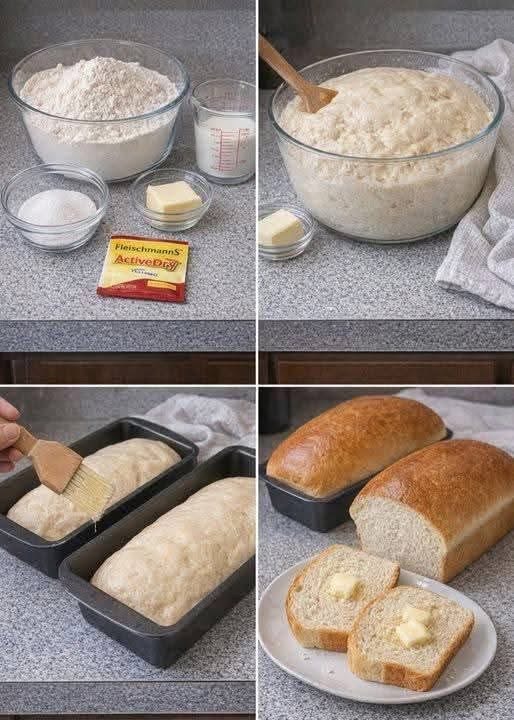
There’s nothing quite like the smell of freshly baked bread filling your kitchen. This soft, fluffy, golden homemade bread is simple enough for beginners and delicious enough to become a family favorite.
The combination of warm milk, butter, and yeast creates a tender loaf with a lightly golden crust and a soft, buttery center. Serve it warm with a little butter, jam, honey, cheese, or alongside your favorite meal.
🛒 Ingredients
- 1 cup warm milk
- ½ cup warm water
- 2¼ teaspoons active dry yeast
- ¼ cup granulated sugar
- 2 tablespoons butter, melted
- 1 teaspoon salt
- 4–4½ cups all-purpose flour
- Extra melted butter for brushing the finished bread
Optional additions
- 1 teaspoon honey for a slightly richer flavor
- 1 tablespoon milk powder for extra softness
- Sesame or poppy seeds for the topping
👩🍳 Instructions
1. Activate the yeast
In a large bowl, combine the warm milk, warm water, sugar, and yeast.
Stir gently and allow the mixture to stand for about 5–10 minutes, until the yeast becomes foamy.
The liquid should be warm, not hot. Very hot liquid can damage the yeast.
2. Add the butter and salt
Add the melted butter and salt to the yeast mixture. Stir until combined.
3. Add the flour
Begin adding the flour gradually, about ½ cup at a time. Mix after each addition.
When the dough starts coming together, transfer it to a lightly floured surface.
You may need anywhere from 4 to 4½ cups of flour, depending on the flour and humidity.
4. Knead the dough
Knead the dough for approximately 8–10 minutes until it becomes smooth, soft, and elastic.
The dough should feel slightly tacky but should not be extremely sticky.
Avoid adding too much flour because this can make the finished bread dense instead of fluffy.
5. First rise
Place the dough into a lightly greased bowl and turn it once so the surface is lightly coated.
Cover with a clean kitchen towel or plastic wrap.
Let it rise in a warm place for approximately 1–1½ hours, or until it has doubled in size.
6. Shape the bread
Gently press the air out of the dough.
Divide it into 2 equal portions if you want two loaves, or shape it into one large loaf.
Place the shaped dough into greased loaf pans or onto a lined baking tray.
7. Second rise
Cover again and allow the dough to rise for another 30–45 minutes, until noticeably puffy.
8. Bake
Preheat your oven to 180°C / 350°F.
Bake the bread for approximately 25–35 minutes, depending on the size and shape of the loaf.
The bread should be beautifully golden on top and sound slightly hollow when tapped.
9. The buttery finish 🧈
As soon as the bread comes out of the oven, brush the top generously with melted butter.
Allow it to cool for at least 10–15 minutes before slicing.
🍞 The Method in Simple Form
Mix → Activate yeast → Knead → First rise → Shape → Second rise → Bake → Butter → Enjoy!
This straightforward method is what makes the recipe so approachable, even if you’re making homemade bread for the first time.
📜 A Little History of Homemade Bread
Bread is one of humanity’s oldest prepared foods. For thousands of years, people have combined grains with water and other ingredients to create nourishing loaves.
The development of yeast-leavened bread transformed bread-making by allowing dough to rise and develop a lighter, more airy texture.
Today, homemade bread remains popular because it combines simple ingredients with a comforting baking tradition. The aroma of bread baking in the oven has become a symbol of home cooking in many cultures.
❤️ Benefits of Homemade Bread
Making bread at home gives you control over the ingredients and preparation.
🥖 Freshness
Homemade bread can be enjoyed while it’s still warm and fresh from the oven.
🧈 Simple ingredients
This recipe uses familiar pantry ingredients without requiring complicated techniques.
👨🍳 Customizable
You can adjust the sweetness, add seeds, herbs, cheese, or other ingredients according to your taste.
💰 Budget-friendly
Flour, yeast, sugar, butter, milk, and water can make several servings of bread at a relatively low cost.
🏠 Comforting
The process of kneading and baking bread can make the kitchen smell wonderful and create a cozy homemade experience.
Note: Bread is primarily a source of carbohydrates, while butter and milk add fat and other nutrients. Portion size matters, especially for people managing their calorie or carbohydrate intake.
✨ How the Bread Gets Its Soft Texture
The magic happens during several stages.
Yeast fermentation: The yeast consumes available sugars and produces carbon dioxide, which creates bubbles in the dough.
Gluten development: Kneading helps develop gluten, creating a stretchy network that holds the gases produced by the yeast.
Rising: As the dough ferments, it expands and becomes light and airy.
Baking: Heat causes the dough to expand further before the structure sets.
Butter: Butter contributes richness and helps give the bread its tender texture and delicious flavor.
🔥 Tips for Perfect Bread Every Time
- Don’t use extremely hot milk or water. Warm is best.
- Give the yeast time to activate. Foamy yeast is a good sign.
- Don’t overload the dough with flour. Slightly soft dough produces softer bread.
- Knead properly. The dough should become smooth and elastic.
- Give the dough enough time to rise. Rising time depends on room temperature.
- Don’t overbake. Too much baking can dry the loaf.
- Brush with butter immediately after baking for a soft, flavorful crust.
- Let the bread cool slightly before slicing so the interior can finish setting.
🥪 Serving Ideas
This bread is wonderful with:
- 🧈 Salted or unsalted butter
- 🍯 Honey
- 🍓 Strawberry or raspberry jam
- 🧀 Cheese
- 🥚 Scrambled or fried eggs
- 🥪 Sandwich fillings
- 🍲 Soup or stew
- ☕ Tea or coffee
It can also be toasted the next morning and served with butter and honey for a simple breakfast.
💕 For Bread Lovers
If you love the smell of fresh bread, this is the kind of recipe you’ll want to keep nearby. There is something special about cutting into a warm homemade loaf, watching the steam escape, and spreading butter over the soft crumb.
Once you make it successfully, you may find yourself experimenting with different shapes, toppings, herbs, seeds, and fillings.
🌟 Conclusion
This soft, buttery homemade bread proves that you don’t need complicated equipment or advanced baking skills to make delicious bread at home.
With a few basic ingredients, some patience, and a little kneading, you can create a loaf that is soft inside, golden outside, and wonderfully fragrant.
Serve it warm with butter and enjoy every bite!