Introduction
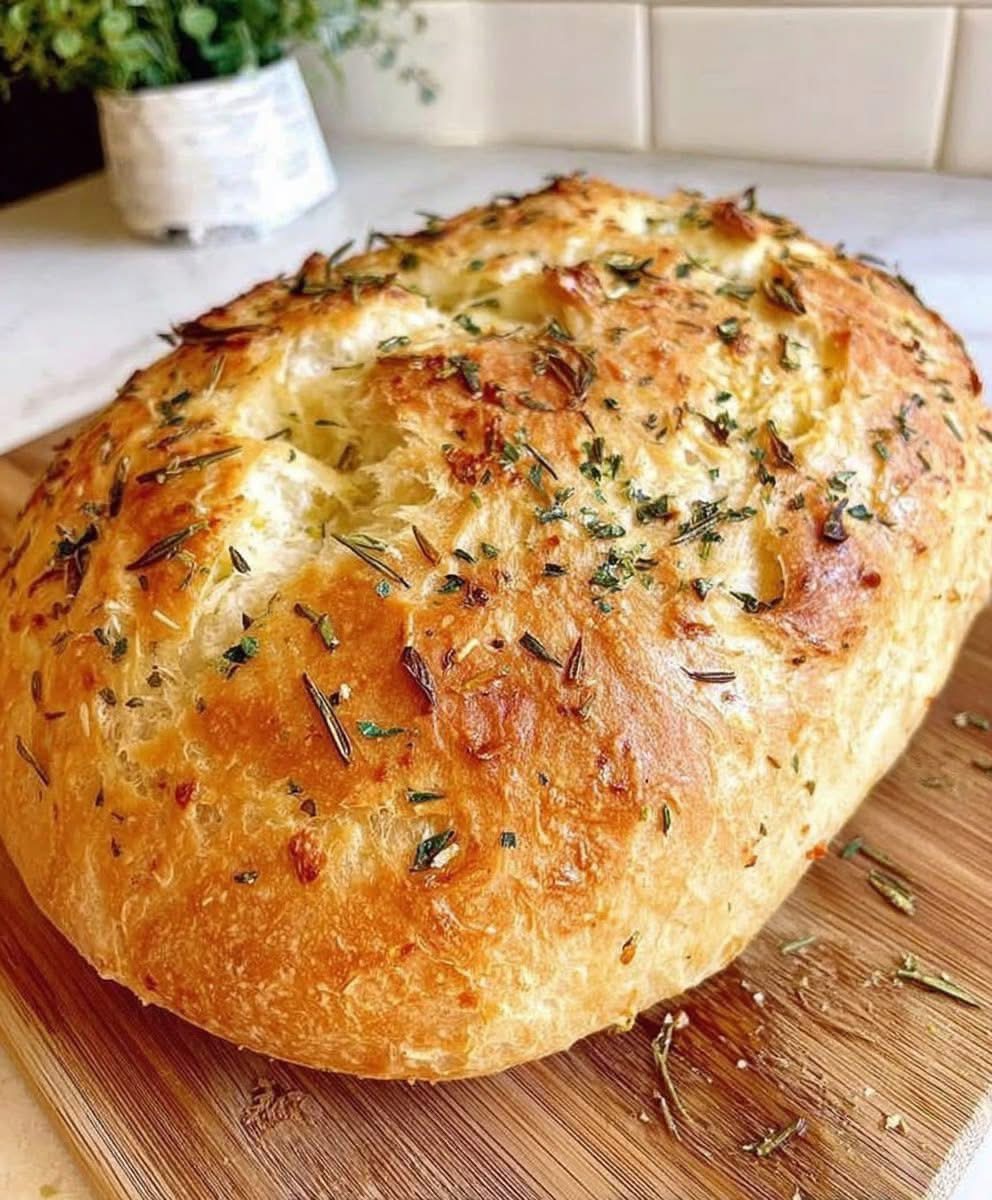
Rustic No-Knead Rosemary Garlic Bread is a traditional artisan-style loaf that combines a crisp, golden crust with a soft, airy interior infused with the earthy aroma of fresh rosemary and the rich flavor of roasted garlic. Unlike many bread recipes that require extensive kneading, this loaf relies on a long fermentation process to naturally develop gluten, resulting in a bakery-quality texture with very little hands-on work.
This bread is ideal for beginners and experienced bakers alike because it requires only a handful of pantry ingredients and simple techniques. The long rise creates deep flavor, while baking in a covered Dutch oven traps steam, producing the signature crackly crust found in artisan bakeries. Rustic No-Knead Rosemary Garlic Bread is perfect for serving with soups, pasta, salads, roasted meats, cheeses, or simply enjoyed warm with butter and olive oil.
History
No-knead bread has ancient roots, as early civilizations often relied on long fermentation rather than intensive kneading to produce bread. Traditional European peasant breads were made with minimal ingredients—flour, water, salt, and natural yeast—and were baked in communal wood-fired ovens.
The modern popularity of no-knead bread grew in the early 21st century when home bakers embraced a simple, long-fermentation technique that produced professional-quality artisan loaves with very little effort. Herbs such as rosemary have long been used in Mediterranean baking, especially in Italy and southern France, where rosemary grows abundantly. Garlic has also been prized for centuries for both its culinary flavor and traditional medicinal uses. Combining rosemary and garlic with rustic bread creates a loaf that reflects centuries of European baking traditions while remaining easy for today’s home cooks.
Ingredients
For the Bread Dough
- 3½ cups (420 g) bread flour
- 1½ teaspoons salt
- ½ teaspoon instant yeast
- 1½ cups (360 ml) warm water
- 2 tablespoons olive oil
- 2 tablespoons fresh rosemary, finely chopped
- 5 cloves garlic, roasted and mashed (or 3 cloves minced fresh garlic)
Optional Toppings
- Extra chopped rosemary
- Flaky sea salt
- Olive oil for brushing
- Cracked black pepper
- Grated Parmesan cheese
Equipment Needed
- Large mixing bowl
- Wooden spoon or silicone spatula
- Plastic wrap or clean kitchen towel
- Dutch oven with lid
- Parchment paper
- Cooling rack
- Sharp knife or bread lame
- Measuring cups and spoons
Preparation Time
- Mixing Time: 10 minutes
- First Rise: 12–18 hours
- Second Rise: 1–2 hours
- Baking Time: 40–45 minutes
- Cooling Time: 1 hour
Total Time: Approximately 15–22 hours (mostly hands-off)
Servings
- Makes 1 large artisan loaf
- Serves 10–12 people
Step-by-Step Instructions
Step 1: Mix the Dough
In a large bowl, combine the bread flour, salt, and instant yeast.
Add the chopped rosemary and roasted garlic.
Pour in the warm water and olive oil.
Stir with a spoon until a shaggy, sticky dough forms. Do not knead.
Step 2: First Fermentation
Cover the bowl with plastic wrap or a clean towel.
Leave the dough at room temperature for 12–18 hours.
The dough is ready when it has doubled in size and is bubbly on the surface.
Step 3: Shape the Dough
Lightly flour a work surface.
Turn the dough out gently.
Fold the edges toward the center several times to form a round loaf.
Avoid pressing out too much air.
Place the dough on parchment paper.
Cover and let rise for another 1–2 hours.
Step 4: Preheat the Dutch Oven
Place the Dutch oven with its lid into the oven.
Preheat to 450°F (230°C) for at least 30 minutes.
A hot Dutch oven creates steam, helping develop a crisp crust.
Step 5: Score the Bread
Using a sharp knife or bread lame, make one or two shallow slashes across the top of the dough.
Scoring allows the loaf to expand evenly during baking.
Step 6: Bake
Carefully transfer the dough with the parchment paper into the hot Dutch oven.
Cover with the lid.
Bake for 30 minutes.
Remove the lid and continue baking for 10–15 minutes until the crust is deep golden brown.
The bread should sound hollow when tapped on the bottom.
Step 7: Cool
Transfer the bread to a cooling rack.
Allow it to cool for at least one hour before slicing.
Cooling helps the crumb finish setting and prevents a gummy texture.
Baking Methods
1. Dutch Oven Method
The traditional method that produces maximum oven spring, a crisp crust, and a soft interior by trapping steam.
2. Baking Stone Method
Place the loaf on a preheated baking stone and add a tray of hot water to the oven to create steam.
3. Cast Iron Skillet Method
Bake in a covered cast iron skillet if a Dutch oven is unavailable. This also creates a beautifully crisp crust.
4. Covered Baking Dish Method
A heavy oven-safe casserole dish with a lid can be used as an alternative for excellent results.
Formation (Structure of the Bread)
A well-made Rustic No-Knead Rosemary Garlic Bread has several distinct characteristics:
- Thick, crisp, golden-brown crust
- Open, airy crumb with irregular holes
- Moist and chewy interior
- Even distribution of rosemary throughout the loaf
- Mild roasted garlic flavor in every slice
- Beautiful rustic round shape
- Fragrant herbal aroma
- Balanced texture with a crunchy exterior and tender center
Nutritional Information (Approximate Per Slice)
- Calories: 180
- Carbohydrates: 34 g
- Protein: 6 g
- Fat: 3 g
- Saturated Fat: 0.5 g
- Fiber: 2 g
- Sodium: 290 mg
Values will vary depending on ingredients and serving size.
Health Benefits
When enjoyed as part of a balanced diet, this bread offers several benefits:
- Rosemary contains antioxidants that may help protect cells from oxidative stress.
- Garlic provides beneficial plant compounds and has long been valued in traditional diets.
- Olive oil supplies heart-healthy monounsaturated fats.
- Homemade bread contains fewer preservatives than many commercial loaves.
- The long fermentation process may improve flavor and can make the bread easier for some people to digest.
- Bread flour provides carbohydrates that supply energy for daily activities.
- Making bread at home allows better control over salt and ingredient quality.
Delicious Variations
- Rosemary Parmesan Bread
- Garlic Cheddar Artisan Bread
- Olive and Herb Bread
- Sun-Dried Tomato Rosemary Bread
- Roasted Onion and Garlic Bread
- Whole Wheat Rosemary Bread
- Asiago Herb Bread
- Black Pepper Rosemary Bread
- Jalapeño Garlic Bread
- Mediterranean Herb Bread
Serving Suggestions
This bread pairs wonderfully with:
- Olive oil and balsamic vinegar
- Butter or herb butter
- Tomato soup
- Creamy mushroom soup
- Pasta dishes
- Beef stew
- Roasted chicken
- Cheese boards
- Sandwiches
- Toast with avocado or eggs
Storage
Room Temperature:
Store in a paper bag or bread box for up to 3 days.
Freezer:
Wrap tightly and freeze for up to 3 months.
Reheating:
Warm in a 350°F (175°C) oven for 8–10 minutes to restore a crisp crust.
Tips for Success
- Measure ingredients accurately.
- Use fresh rosemary for the best aroma and flavor.
- Roasted garlic gives a sweeter, milder taste than raw garlic.
- Resist adding extra flour to the sticky dough.
- Allow the full fermentation time for the best flavor and texture.
- Preheat the Dutch oven thoroughly.
- Let the bread cool completely before slicing.
Why People Love Rustic No-Knead Rosemary Garlic Bread
Home bakers and bread lovers enjoy this loaf because it is:
- Easy to make with minimal effort
- Rich in homemade artisan flavor
- Fragrant with fresh rosemary and garlic
- Crispy on the outside and soft inside
- Versatile for meals and snacks
- Made with simple pantry ingredients
- Perfect for beginners
- Impressive enough for guests and special occasions
- Delicious fresh or toasted
- Comforting and satisfying in every slice
Conclusion
Rustic No-Knead Rosemary Garlic Bread is a timeless artisan loaf that proves exceptional bread does not require complicated techniques. With just a few wholesome ingredients, a long fermentation, and patient baking, you can create a beautifully crusty loaf with a tender, airy crumb and the irresistible flavors of rosemary and garlic. Whether served alongside hearty meals, enjoyed with olive oil and butter, or used for gourmet sandwiches, this rustic bread brings warmth, comfort, and the pleasure of homemade baking to every table. Its simplicity, versatility, and rich flavor make it a recipe that bakers and bread lovers will return to again and again.