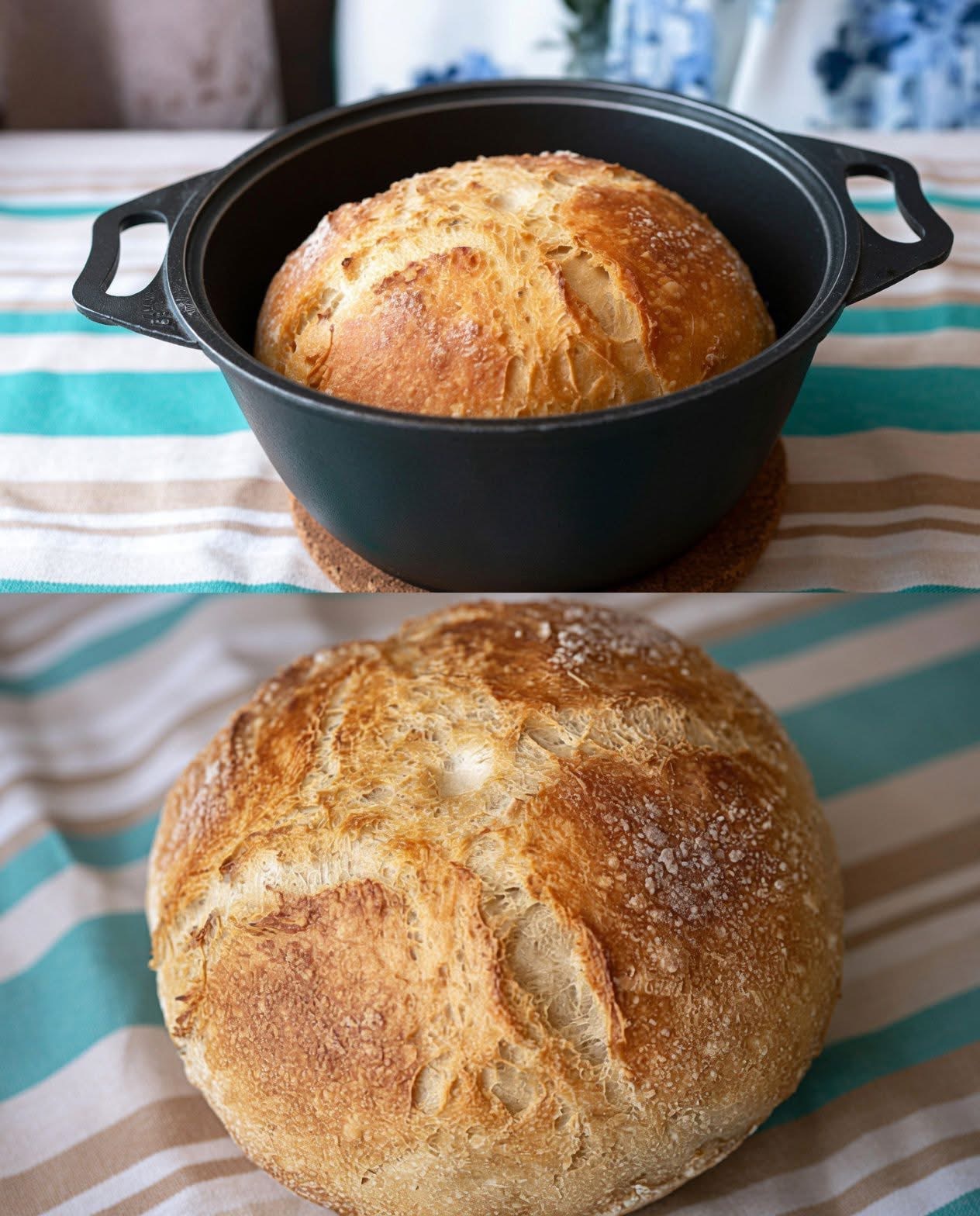
There’s something truly special about the aroma of freshly baked bread filling your home. With just a few pantry staples and a little patience, you can create a loaf that’s soft on the inside, golden and crispy on the outside, and bursting with homemade flavor. Once you experience the taste and texture of this simple artisan bread, you’ll find yourself reaching for your mixing bowl instead of buying bread from the store.
Whether you’re serving it with soup, making sandwiches, or simply enjoying a warm slice with butter, this recipe is a timeless favorite for every home baker.
Ingredients
- 4 tablespoons (60 ml) olive oil
- 1 tablespoon (10 g) active dry yeast
- 1 teaspoon salt
- 1⅓ cups (320 ml) warm water (about 105–110°F / 40–43°C)
- 4¾ cups (570 g) plain or all-purpose flour
- Optional: 1 teaspoon sugar (to help activate the yeast)
- Extra flour for dusting
- Olive oil for greasing
Equipment
- Large mixing bowl
- Measuring cups and spoons
- Wooden spoon
- Clean kitchen towel
- Baking tray or loaf pan
- Parchment paper (optional)
- Cooling rack
Instructions
Step 1: Activate the Yeast
In a large bowl, combine the warm water, yeast, and optional sugar. Stir gently and let it sit for 5–10 minutes until the mixture becomes foamy. This means the yeast is active and ready to use.
Step 2: Prepare the Dough
Add the olive oil and salt to the yeast mixture.
Gradually add the flour, one cup at a time, mixing until a soft dough forms.
Step 3: Knead the Dough
Transfer the dough onto a lightly floured surface.
Knead for about 8–10 minutes until the dough becomes smooth, elastic, and slightly tacky.
If necessary, sprinkle in a little more flour, but avoid adding too much to keep the bread soft.
Step 4: First Rise
Place the dough into a lightly oiled bowl.
Turn it once so it’s coated with oil.
Cover with a clean towel or plastic wrap.
Let rise in a warm place for 60–90 minutes or until doubled in size.
Step 5: Shape the Bread
Punch down the dough to release the air.
Shape into a loaf or divide into two smaller loaves.
Place onto a lined baking tray or into a greased loaf pan.
Step 6: Second Rise
Cover again and let the dough rise for another 30–40 minutes until puffy.
Step 7: Bake
Preheat the oven to 375°F (190°C).
Optionally, score the top with a sharp knife.
Bake for 30–35 minutes, or until the loaf is beautifully golden and sounds hollow when tapped on the bottom.
Step 8: Cool
Transfer the bread to a cooling rack.
Allow it to cool for at least 20 minutes before slicing to preserve its texture.
Baking Methods
Traditional Oven
Produces the best golden crust and soft interior.
Dutch Oven Method
Bake covered for the first 25 minutes, then uncovered for 10–15 minutes for a bakery-style crust.
Bread Machine
Use the dough cycle, then shape and bake in the oven for the best results.
Tips for Perfect Bread
- Always use warm—not hot—water to avoid killing the yeast.
- Knead thoroughly to develop gluten for a light texture.
- Let the dough rise in a warm, draft-free place.
- Brush the loaf with olive oil or melted butter after baking for a softer crust.
- Add herbs, garlic, cheese, olives, or seeds for extra flavor.
Nutritional Information (Approximate per Slice)
- Calories: 170
- Carbohydrates: 30 g
- Protein: 5 g
- Fat: 4 g
- Fiber: 1.5 g
- Sodium: 160 mg
Health Benefits
- Homemade bread contains fewer preservatives than many store-bought loaves.
- Olive oil provides heart-healthy monounsaturated fats.
- Fresh bread offers satisfying energy from complex carbohydrates.
- You control the ingredients, making it easy to reduce salt or add whole grains and seeds.
- Baking at home can be a relaxing and rewarding activity.
The History of Homemade Bread
Bread is one of the oldest prepared foods in human history, dating back more than 10,000 years. Ancient civilizations in Egypt, Greece, and Rome perfected the art of leavened bread using natural fermentation. Throughout history, bread has symbolized nourishment, hospitality, and family traditions. Today, homemade bread continues to bring people together around the table, combining centuries-old techniques with modern convenience.
Serving Suggestions
This bread is delicious with:
- Butter and honey
- Homemade jam
- Olive oil and balsamic vinegar
- Soups and stews
- Sandwiches
- Toast with avocado
- Garlic bread
- Grilled cheese
- Breakfast eggs
Storage
- Store at room temperature in an airtight bag for up to 3 days.
- Refrigerate for up to 1 week.
- Freeze slices for up to 3 months.
- Reheat in the oven for a freshly baked taste.
Why Everyone Loves This Recipe
❤️ Soft, fluffy interior
❤️ Crispy golden crust
❤️ Budget-friendly ingredients
❤️ Beginner-friendly instructions
❤️ No preservatives
❤️ Perfect for sandwiches and toast
❤️ Freezes beautifully
❤️ Better than most store-bought bread
Conclusion
Fresh homemade bread is one of life’s simplest pleasures. With just a handful of ingredients and a little time, you can bake a loaf that’s fragrant, flavorful, and satisfying. Whether you’re a first-time baker or an experienced cook, this reliable recipe delivers delicious results every time. Once you taste a warm slice straight from the oven, you may never want to buy bread from the store again. Happy baking